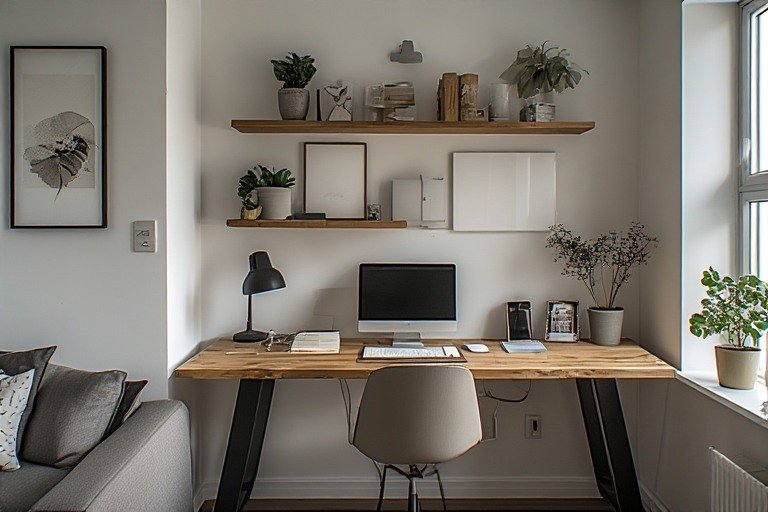
Small spaces don’t require compromise — they require strategy. Whether you’re working from a studio apartment, a dorm room, or a compact bedroom, the right small desk setup can transform limited square footage into a focused, functional workspace. In fact, the constraint of a small space often produces cleaner, more intentional setups than a larger room ever would.
This guide covers the best small desk setup ideas organized by layout type, with real tips for each, plus storage strategies, desk buying guidance, and everything you need to make a tiny workspace actually work. For style inspiration alongside function, see our full desk setup ideas hub.
Why Small Workspaces Need Smart Organization
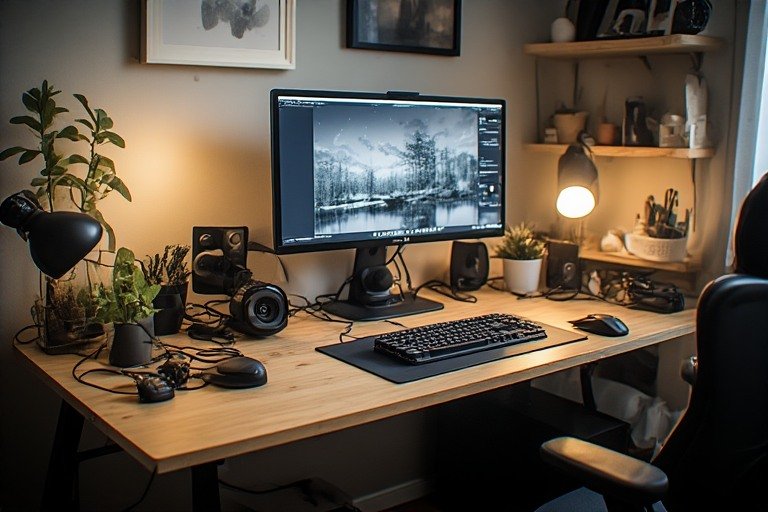
Small spaces amplify every inefficiency. A tangled cable, a cluttered surface, or poor lighting becomes more noticeable and more draining in a compact room. The good news: small desk setup ideas that solve one problem often solve several at once. Vertical storage frees floor space and clears the surface. Cable management reduces visual chaos and improves focus. A well-placed lamp improves both lighting and mood.
The guiding principle for any small workspace is intentionality — every item on the desk earns its place, every piece of furniture serves a clear purpose, and nothing is there by accident. This same philosophy sits at the heart of minimalist desk setup ideas, making the two approaches natural partners. If you’re building a small gaming rig, our gaming desk setup ideas guide covers how to maximize performance in a tight footprint.
13 Small Desk Setup Ideas That Actually Work
1. Wall-Mounted Floating Desk
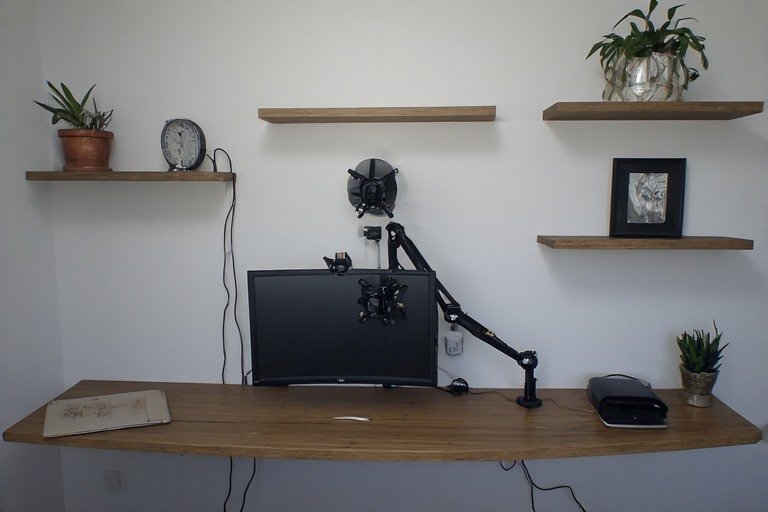
The ultimate space-saving desk solution. A floating desk attaches directly to the wall, leaving the floor completely open — which makes the room feel larger and gives you space for storage underneath. Pair with a monitor arm and floating shelves above and you have a complete, organized workstation in under 10 square feet of wall space. Works brilliantly in bedrooms, hallways, and living room corners.
- Mount at 28–30 inches high for comfortable seated ergonomics
- Install floating shelves 12–15 inches above the desk for storage and décor
- Use adhesive cable clips to route cables along the wall — no drilling for renters
- Choose white or light natural wood to maximize the sense of space
2. Folding Drop-Leaf Desk
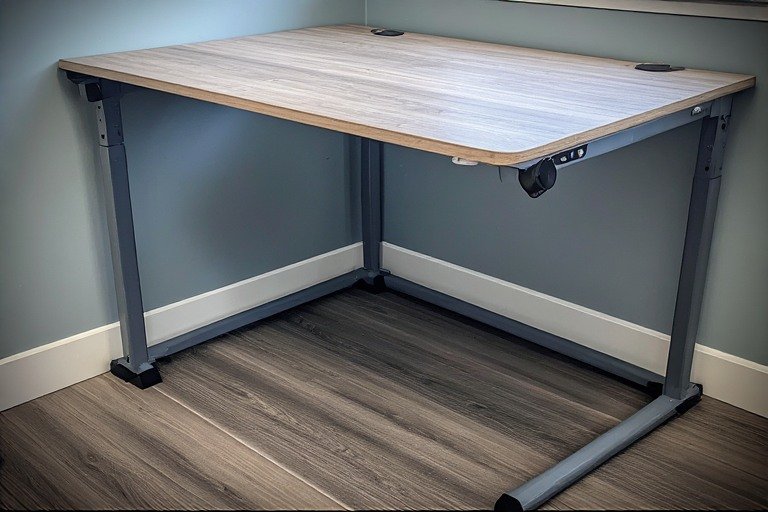
Drop-leaf desks give you a full work surface when you need it and fold away to almost nothing when you don’t. Ideal for studio apartments and bedroom corners where the desk needs to disappear after hours. IKEA’s Bjursta ($50–80) is the go-to budget option; premium versions ($200–500) offer smoother hinges and better materials. Test the mechanism in person — it should operate silently under the weight of a monitor.
- Position in a corner so the folded leaf doesn’t protrude into walkways
- Mount a shallow shelf above for storage that stays accessible when folded
- Use a rolling cart beside the desk to hold gear during work sessions, tucked away when done
3. Under-Window Desk
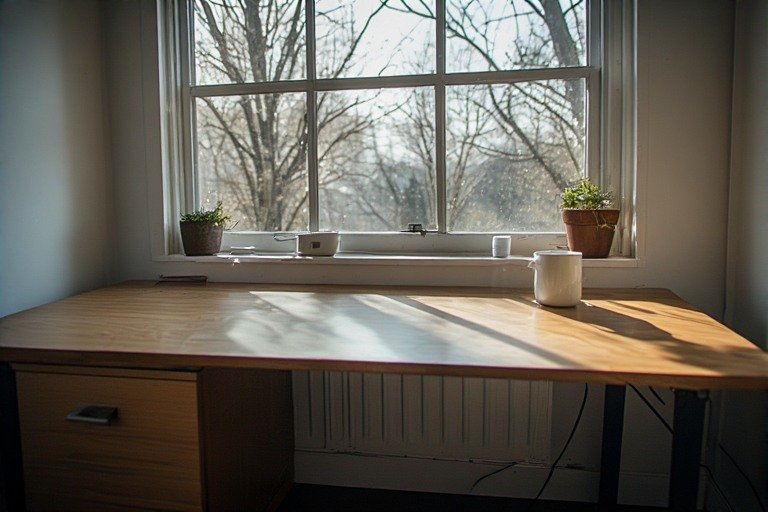
Positioning your desk under a window solves two problems at once: you get maximum natural light and you use wall space that would otherwise sit empty. Natural light boosts mood, reduces eye strain, and makes video calls look dramatically more professional. Use a slim 36–48 inch desk that doesn’t block window operation, and add light-filtering shades for glare and privacy control.
- Position your monitor perpendicular to the window — not facing it — to avoid screen glare
- Add a small plant to the windowsill for greenery without using desk surface
- Install a compact task lamp for evening work when the window light is gone
4. Corner L-Shaped Desk
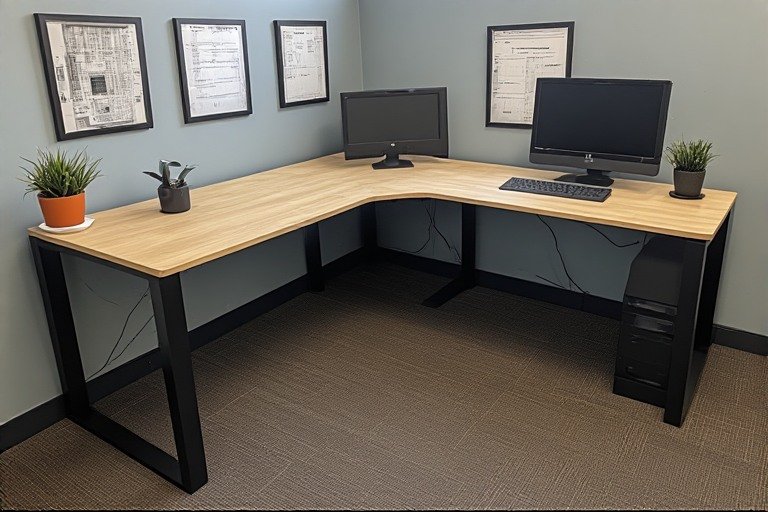
L-shaped desks turn dead corner space into your most productive square footage. This configuration gives you 40–60% more working surface than a straight desk of the same depth — enough for a dual monitor setup, reference materials, and a dedicated zone for each type of task. For renters, DIY modular versions using two floating shelves and metal legs adapt to any room and leave no permanent marks.
- Place your primary monitor on the longest section for maximum comfortable viewing distance
- Use the shorter section for secondary tasks, a notebook, or a plant
- Install corner shelving above to use the often-wasted overhead space
- Sit at the corner junction for natural access to both surfaces
5. Loft Bed with Desk Underneath
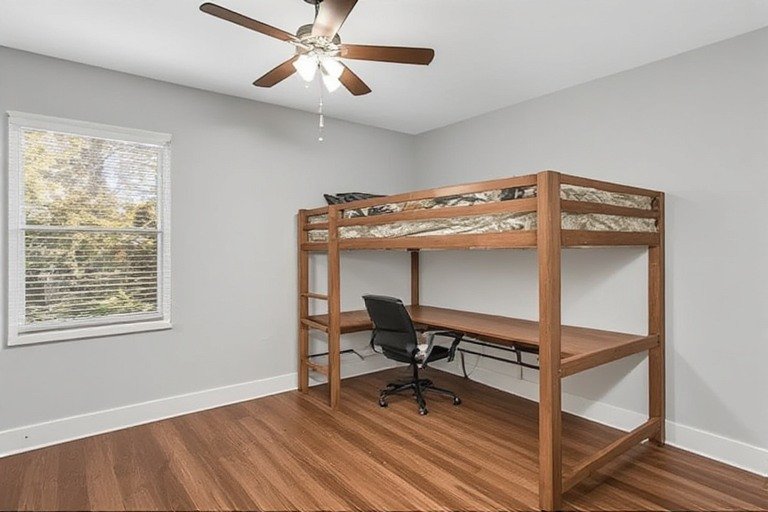
Loft beds create a second floor in small rooms, freeing the entire ground level for a proper desk setup. Popular in dorms, tiny studios, and small bedrooms, a quality loft ($300–1,000) provides 3–3.5 feet of headroom underneath — enough for a monitor, task chair, and overhead storage. Invest in sturdy construction; a wobbling loft creates real psychological unease and defeats the purpose.
- Ensure a minimum 3 feet of headroom between the loft platform and the ceiling
- Install LED panels or track lighting directly above the desk area
- Add a battery-operated clip-on fan — under-loft spaces get stuffy quickly
6. Murphy Desk (Wall-Hinged Fold-Down)
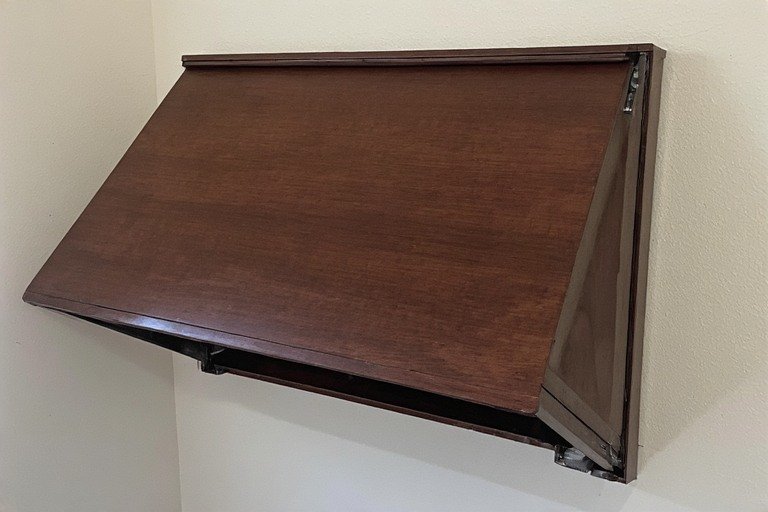
Murphy desks fold completely flat against the wall and can be closed with equipment still on the surface — making them truly invisible when work is done. The best option for studio apartments and multipurpose rooms where the desk must disappear completely. Quality units ($300–800) are built for hundreds of open/close cycles. Cheap versions fail fast — this is one area where spending more pays off immediately.
- Locate studs before installation — the wall must handle the full loaded weight
- Leave equipment in place while folded, as the desk is designed to handle this
- Mount a pegboard or magnetic strip above for frequently used items
7. Window Sill Desk Conversion
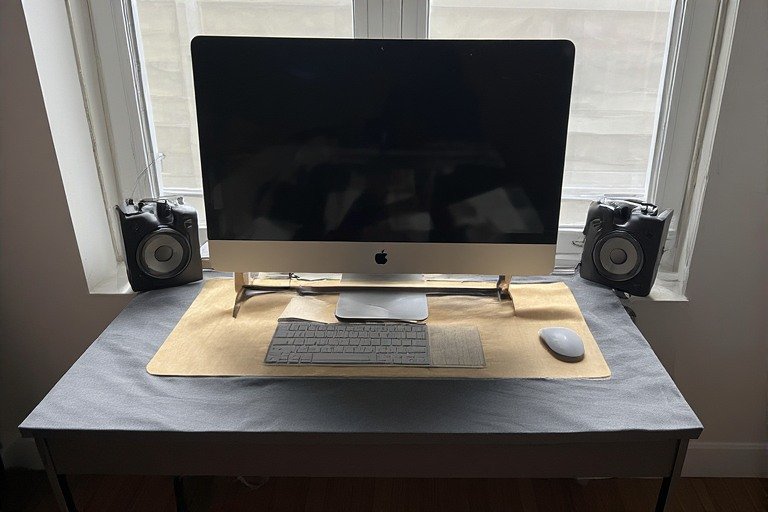
Deep window sills — common in older buildings — can become functional desks with minimal modification. Many sills are 12–18 inches deep, enough for a laptop, keyboard, and mouse. The natural light proximity is unbeatable, and you use existing architecture most people overlook entirely. Best for part-time work, writing, or video calls rather than all-day sessions with fine detail work.
- Use a portable monitor stand or book holders to raise the laptop to eye level
- Add a clip-on task light to the window frame for evening work
- Use a thin rubber mat to protect the sill from heat and scratches
8. Cloffice (Closet Office)
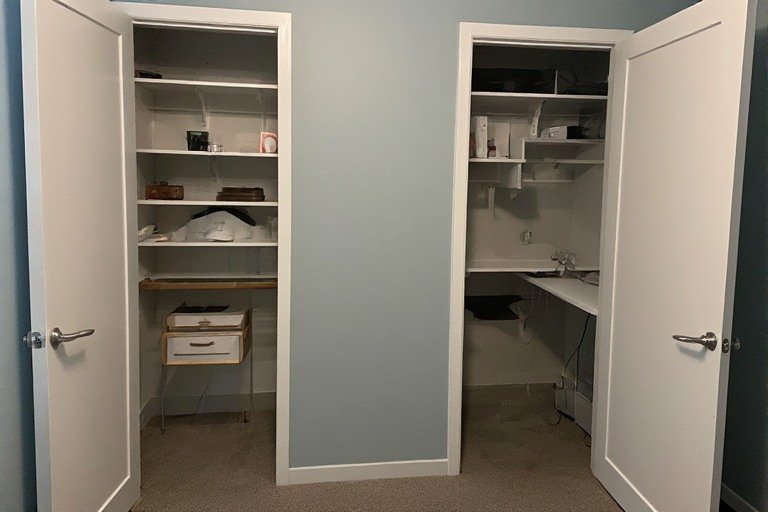
Converting an underused closet into a dedicated office is one of the smartest small-space moves available. A standard bedroom closet (3–4 feet wide, 2 feet deep) fits a narrow desk, and the enclosed walls naturally reduce distractions. Closing the door creates a real psychological boundary between work and living space — invaluable when your bedroom is also your office. Good lighting and ventilation are essential since closets have neither by default.
- Install LED strip lighting on the upper interior walls for even, shadow-free light
- Use the back wall for a pegboard to maximize vertical storage
- Replace the door with a curtain for better air circulation and a softer look
- Paint interior walls a light color to reflect light and make the space feel open
9. Rolling Desk Cart
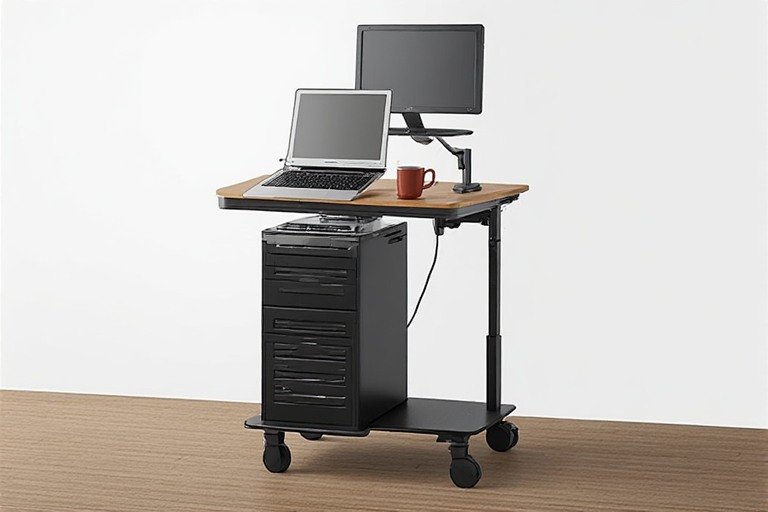
A rolling desk cart gives you a workspace you can move to wherever the light is best, roll out of sight when work ends, and take with you if you move. A quality cart ($60–200) with locking wheels and a solid surface handles a laptop, small monitor, and essential supplies. Perfect for renters, students, or anyone whose living situation is still evolving. The mobility tends to produce cleaner setups since everything must fit within the cart’s footprint.
- Always lock the wheels before sitting down to work
- Use the lower shelf for your power strip and cable bundle
- Add a small monitor arm to the surface for proper ergonomic screen height
10. Console Table as Desk
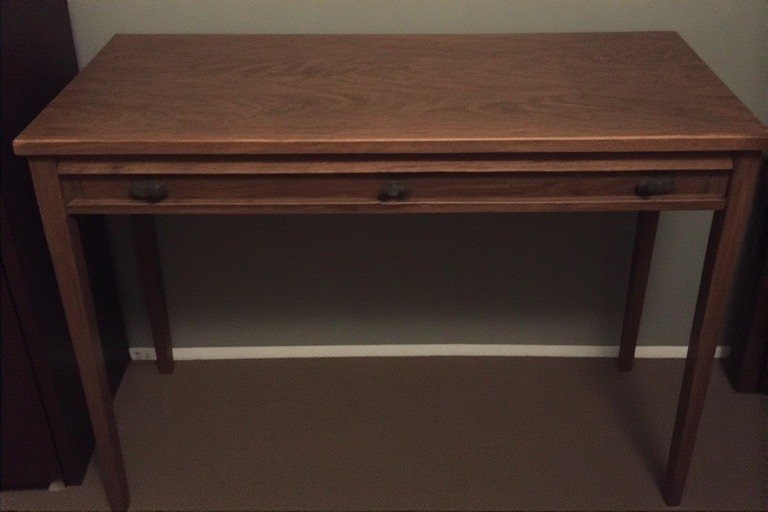
Console tables are narrow, tall, and shallow — exactly the proportions a small desk setup needs. Originally designed for entryways, they work perfectly for laptop-based setups and blend into living rooms and bedrooms because they do not look like office furniture. Available in every style from mid-century modern to industrial, and prices range from $80 at IKEA to $400+ for designer pieces. For more on laptop-optimized setups, see our laptop desk setup ideas guide.
- Test the depth in person — you need at least 10–12 inches for a keyboard and mouse
- Use a small monitor arm to save surface space
- Add wall-mounted shelves above for storage that does not compete with the desk surface
11. Vertical Monitor Stack Setup
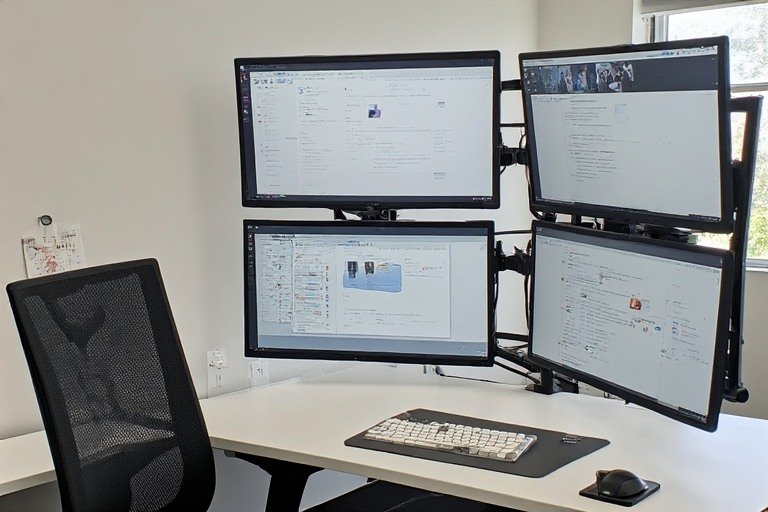
Stacking two monitors vertically instead of side by side frees up significant desk width while maintaining full screen real estate. One monitor sits at eye level, the second mounts above it on a dual monitor arm. This is surprisingly comfortable after a brief adjustment period and works particularly well for setups where one screen is primary (active work) and the other is secondary (chat, email, reference). A smart move for any clean desk setup where horizontal space is at a premium.
- Keep the lower monitor at eye level — neck strain kills productivity fast
- Angle the upper monitor slightly downward to reduce neck extension
- Run your primary application on the lower screen for more comfortable long sessions
12. Pegboard Wall + Floating Desk
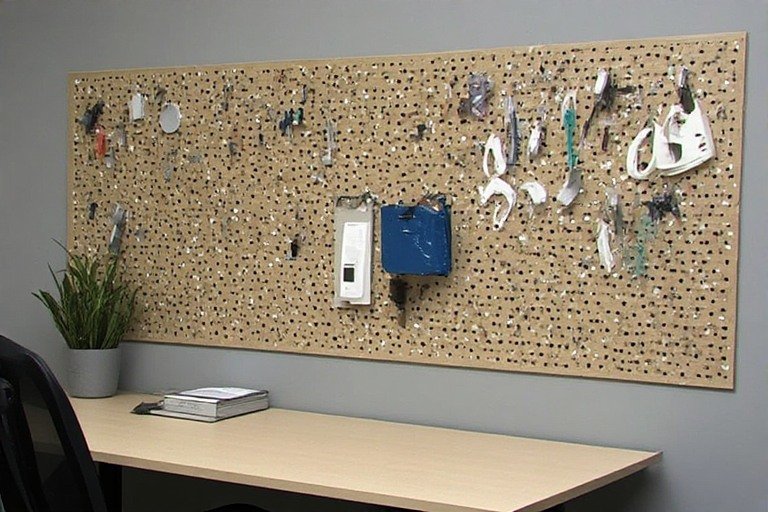
A floating desk below a pegboard wall is one of the most efficient small desk setups available. The desk stays compact because the wall handles all the storage — hooks, shelves, baskets, and accessories all live on the pegboard within arm’s reach without touching the desk surface. A 24–30 inch desk paired with a 4×4 foot pegboard creates a complete, organized workstation in a remarkably small footprint. Highly customizable and endlessly rearrangeable as your needs change.
- Mount the pegboard at eye level when seated for comfortable reach to daily items
- Paint the pegboard and desk the same color for a cohesive built-in look
- Organize by frequency: daily items at eye level, occasional items at the top and bottom
13. Alcove Desk with Built-In Storage
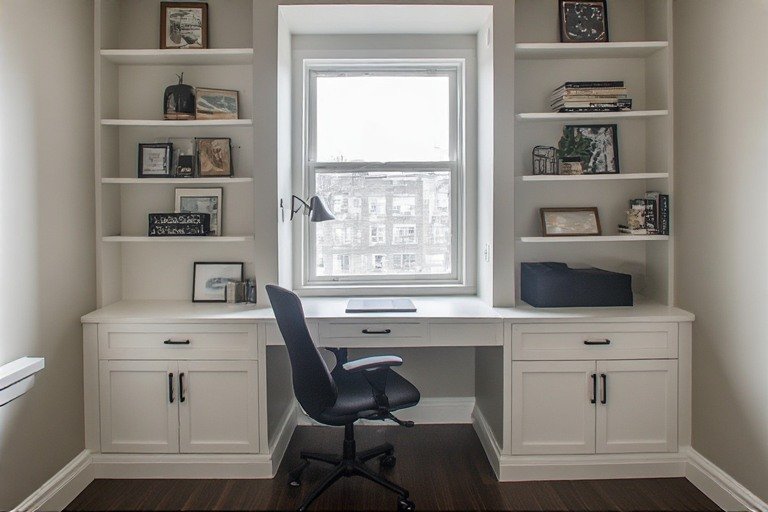
Apartment alcoves and nooks are some of the most underused real estate in any home. A desk fitted precisely into an alcove — with shelving above and to the sides — looks like built-in architecture rather than furniture you placed in a room. Add a contrasting paint color on the back wall and dedicated lighting, and the alcove becomes a distinct, intentional workspace zone within the larger room.
- Measure precisely — custom or DIY solutions fit far better than standard furniture in alcoves
- Paint the back wall a contrasting color to define the space visually
- Add LED strips above for task lighting — alcoves are typically darker than the rest of the room
- Add a small rug to define the floor zone and reduce echo
Storage Ideas for Small Desk Setups
Storage is the secret weapon of every successful small desk setup. The desk stays clear because everything has a designated home — accessible but out of the way.
Vertical storage: Wall-mounted shelves, pegboards, and floating cabinets multiply storage without consuming floor space. Use the wall above your desk extensively — shelves 10–15 inches above head height provide easy-reach storage without interfering with your sightlines or work surface. This principle is central to both small workspace design and minimalist desk setups.
Under-desk storage: Rolling drawers, file cabinets, and storage ottomans fit perfectly beneath desks. Use these for items you access frequently — pens, notepads, cables — while keeping them completely out of sight. Drawer organizers prevent shifting and maintain the organized look over time.
Closed vs. open storage: Closed cabinets with doors hide clutter and keep dust off equipment. Open shelving keeps frequently used items accessible and the space feeling airy. The most effective small setups use both — closed for occasional-access items, open for daily ones. This works equally well for a work from home desk setup or a compact gaming desk setup.
Cable management: Cables are the single biggest visual culprit in cluttered small desks. Velcro ties ($8), adhesive cable clips ($6), and an under-desk tray for your power strip cost under $25 total and take 20 minutes to install. The before/after impact is immediate and significant.
How to Keep a Small Desk Clean and Organized
The daily reset: Spend 2–3 minutes at the end of each workday returning everything to its place. Small spaces cannot absorb gradual accumulation — a reset ritual keeps the desk functional and the space feeling calm. This matters more in small setups than large ones because there is no margin for drift.
One-in-one-out: For every new item added to the desk area, remove one existing item. Small spaces reach capacity quickly and invisibly — this rule prevents the slow creep that turns an organized setup into a cluttered one.
Visual consistency: Use matching organizers and storage containers throughout. A desk with five different types of pen holders looks chaotic regardless of how tidy it is. A desk with one cohesive set of organizers looks intentional regardless of size.
One decorative element: One plant, one photo, or one piece of art. Any more than that overwhelms a small surface. Choose one item that genuinely matters to you and let it do the work for the whole desk. For a deeper look at what belongs on a desk surface, our aesthetic desk setup ideas guide covers the principles behind a curated, intentional workspace.
Best Desks for Small Spaces
Ideal dimensions: For small spaces, aim for 36–48 inches wide and 18–24 inches deep. This fits a monitor or laptop stand plus keyboard and mouse without overwhelming the room. Width matters more than depth — a shallower desk leaves more floor space for movement.
Color and material: Light-colored surfaces — white, natural wood, light gray — make spaces feel larger than dark ones. Glass creates openness but shows fingerprints. Wood adds warmth. Choose based on your room’s palette and how much light you want the surface to reflect.
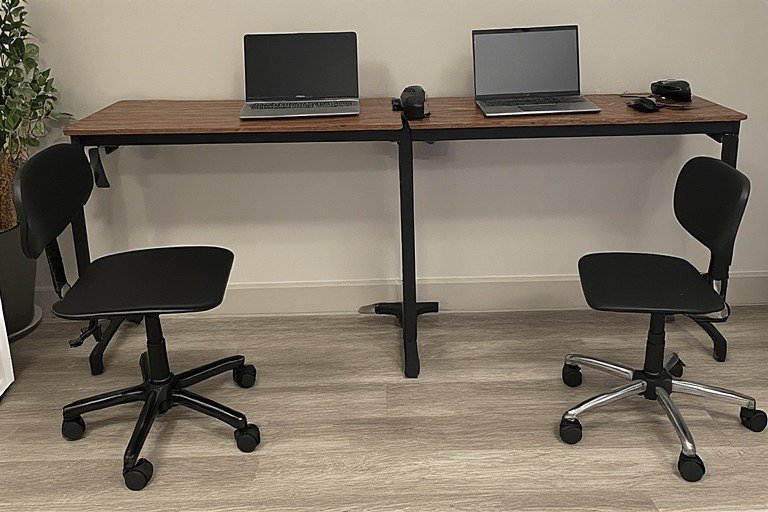
Budget ($100–250): IKEA Bekant (47.5 inches, $60–100), IKEA Malm (with drawer storage, $120–150). Lightweight, renter-friendly, and solid for students and first setups.
Mid-range ($250–600): Autonomous and Flexispot offer compact sit-stand options ($300–400) that deliver ergonomic benefits without requiring a large footprint. Worth the investment for full-time WFH workers.
Premium ($600+): Floating desks from specialty brands ($150–400) and L-shaped options from Tribesigns and Greenforest ($200–400) give you maximum workspace per square foot. Custom woodworkers can build precisely to your dimensions for setups that last decades.
Final Thoughts
Small desk setups prove that constraint breeds creativity. You do not need a dedicated office room to work well — you need intention, the right furniture for your actual space, and a clear system for keeping things organized. Start with layout (floating, corner, or fold-away), then address storage, then lighting, then the small details. Build in that order and the result will be a workspace that is not just functional, but genuinely enjoyable to spend hours in every day.
Explore more: Minimalist Desk Setup Ideas | Clean Desk Setup Ideas | Laptop Desk Setup Ideas | Work From Home Desk Setup | All Desk Setup Ideas