Aesthetic Desk Setup Ideas: 6 Styles, Budgets & the Complete Guide
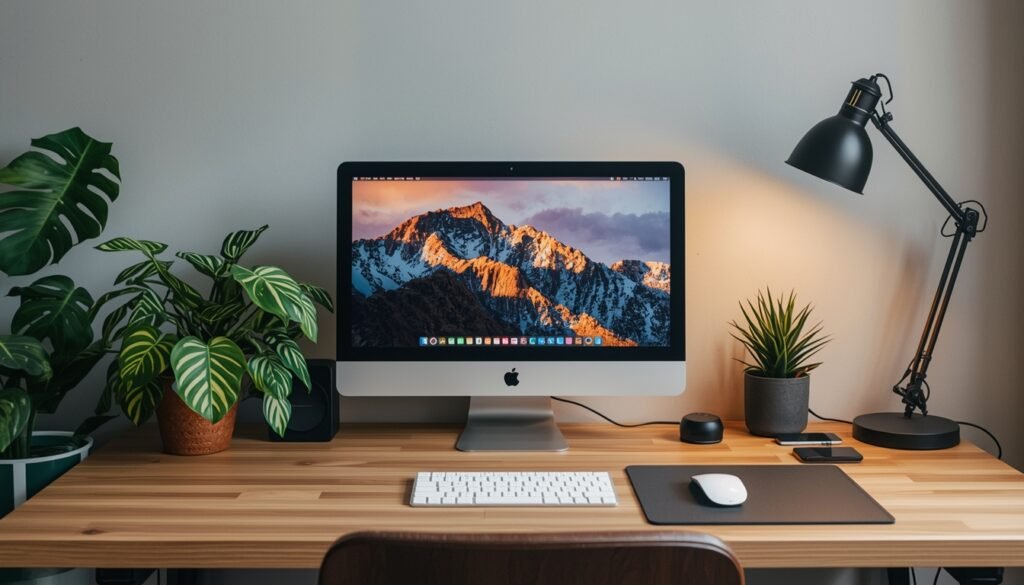
Most aesthetic desk setup ideas guides tell you to “add a plant” and “manage your cables.” This one goes further — matching specific desk aesthetics to your personality, giving you a step-by-step upgrade path, and showing you what actually matters vs. what is just clutter dressed up as decor. These aesthetic desk setup ideas are designed to produce a desk that looks incredible and actually functions as a real workspace. For a broader overview first, see our full desk setup ideas guide.
What Actually Makes a Desk Look “Aesthetic” (It’s Not What You Think)
Here is something no one says out loud: most “aesthetic” desks you see on Pinterest and TikTok are curated for a 30-second photo shoot. They do not work as real workstations. The goal of this guide is a desk that looks incredible and actually functions.
The single most important principle behind any great-looking desk is not the products — it is visual rhythm. Your eye needs places to rest (negative space) and points to travel to (anchors). Without this, even expensive gear looks chaotic.
Three forces create visual rhythm in any aesthetic desk setup:
- Height Variation — Objects at the same height create a flat, boring line. Mix tall items (a monitor, lamp, plant on a stand) with medium items (a desk organizer, small speaker) and flat items (a desk pad, notebook). Three tiers minimum — most people have one.
- Color Discipline — Pick a maximum of three colors: a dominant neutral (60%), a supporting tone (30%), and one intentional accent (10%). Random colors masquerading as “personality” are the number one reason desks look cluttered rather than curated.
- Intentional Negative Space — At least one-third of your desk surface should be empty. Not empty because you have not filled it yet — empty on purpose. That breathing room makes everything else look more considered.
The 5-Item Rule: If you cannot name a reason for every item on your desk surface, it does not belong there. Every object should either be essential for work, visually intentional, or personally meaningful. Any one of those counts — but it must be one.
6 Desk Aesthetic Styles at a Glance
Not sure which aesthetic desk setup style fits you? Use this table to find your direction before diving into each one in detail.
| Style | Palette | Key Item | Best For |
|---|---|---|---|
| Dark Academia | Brown, brass, cream | Arched Edison lamp | Writers, readers, creatives |
| Japandi / Wabi-Sabi | White, oak, stone | Ceramic organizer | Minimalists, remote workers |
| Y2K / Pastel Tech | Pink, lilac, chrome | Mushroom lamp | Students, content creators |
| Cottagecore / Botanical | Sage, terracotta, cream | Trailing plant | Journalers, laptop workers |
| Dark Minimal / Tech Cave | Black, charcoal, one accent | Monitor arm | Gamers, developers |
| Editorial / Monochrome | Black and white only | Bold-shape lamp | Designers, architects |
6 Aesthetic Desk Setup Ideas — With Specific Product Guidance for Each Style
Here is what most guides miss: “aesthetic desk setup ideas” is not one thing. There are wildly different styles, and what works for a dark academia setup looks wrong in a minimalist Japandi space. Pick the one that resonates with your personality, then build intentionally around it.
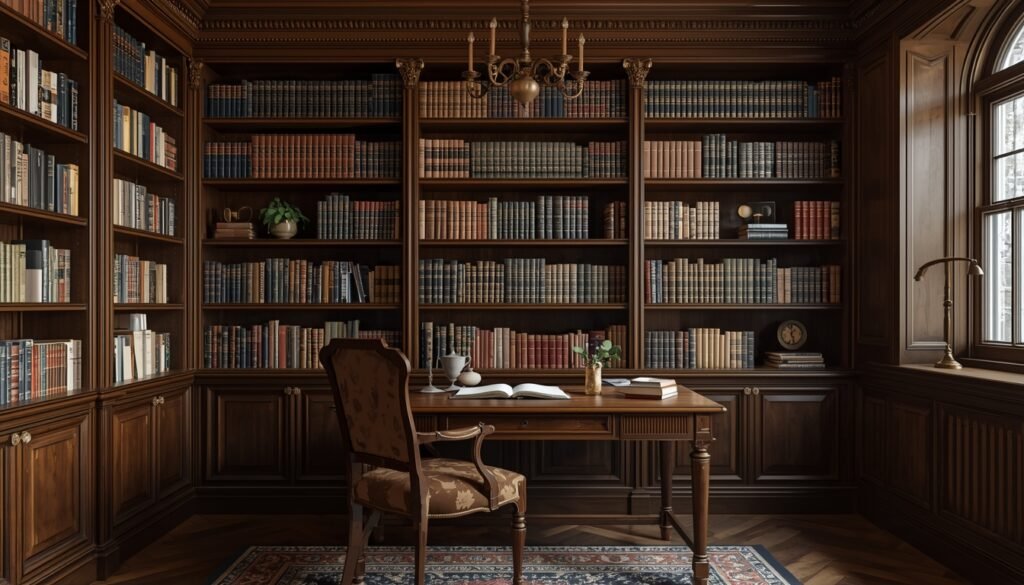
Style 01 — Dark Academia Aesthetic Desk Setup
Rich wood tones, warm brass hardware, antique-adjacent textures. Books are not just storage — they are decor. The vibe: a Victorian scholar’s private study. This is one of the most searched aesthetic desk setup ideas because it rewards curated imperfection — mismatched books, aged brass, warm lamp glow — in a way that other styles do not.
Must-Have Elements: Warm Edison bulb lamp, leather or linen desk pad, brass pen holder, dark wood monitor riser, hardcover books stacked upright, moody wall art print.
Style 02 — Japandi / Wabi-Sabi Aesthetic Desk Setup
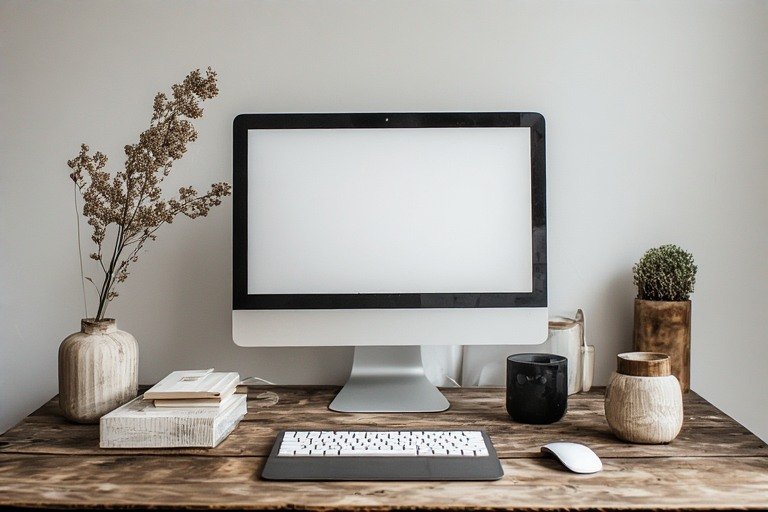
The hybrid of Japanese minimalism and Scandinavian warmth. Natural materials, muted palettes, deliberate emptiness. Nothing competes for attention — everything earns its place. The Japandi aesthetic desk setup idea is the most popular with remote workers because it photographs beautifully on video calls and feels calming during long work sessions. Closely related to the minimalist desk setup approach.
Must-Have Elements: Bamboo or light oak desk mat, single ceramic object, white or linen wireless keyboard, low trailing plant, linen cable management box, stone or concrete organizer.
Style 03 — Y2K / Pastel Tech Aesthetic Desk Setup
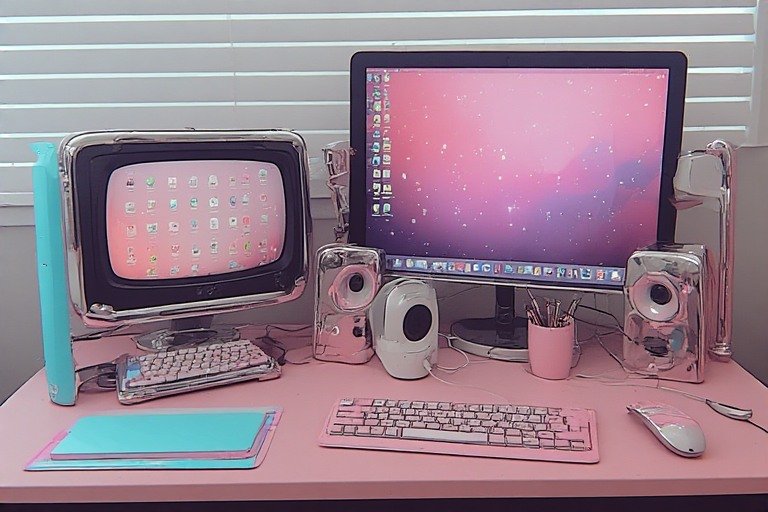
Chrome accents, iridescent surfaces, bubblegum colors, playful retro-futurism. This aesthetic desk setup idea dominated Pinterest through 2023–2025 and continues to grow. Think Lisa Frank went to IKEA. It is the most expressive of all the desk aesthetic styles — and the most forgiving of color because the palette itself is the point.
Must-Have Elements: Pastel mechanical keyboard, LED strip bias lighting, translucent acrylic organizer, star or moon lamp, holographic mousepad, pastel polaroids on wall.
Style 04 — Cottagecore / Botanical Aesthetic Desk Setup
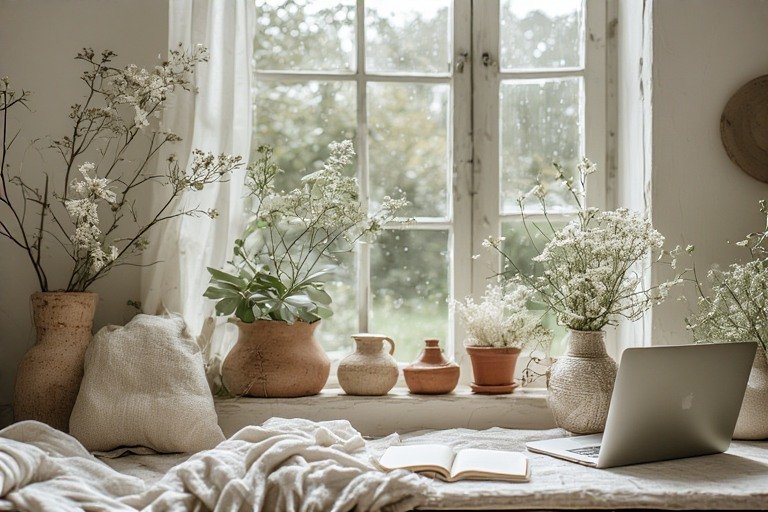
Soft greens, dried florals, terracotta, linen textures. Makes you want to journal by a window in the rain. This aesthetic desk setup idea is anti-tech in feel but accommodates a laptop beautifully — the natural materials simply surround the technology rather than competing with it. A natural fit with laptop desk setup ideas that prioritize warmth and simplicity.
Must-Have Elements: Trailing pothos or ivy, dried flower arrangement, terracotta pot pencil holder, woven basket storage, cream or sage desk pad, pressed flower print art.
Style 05 — Dark Minimal / Tech Cave Aesthetic Desk Setup
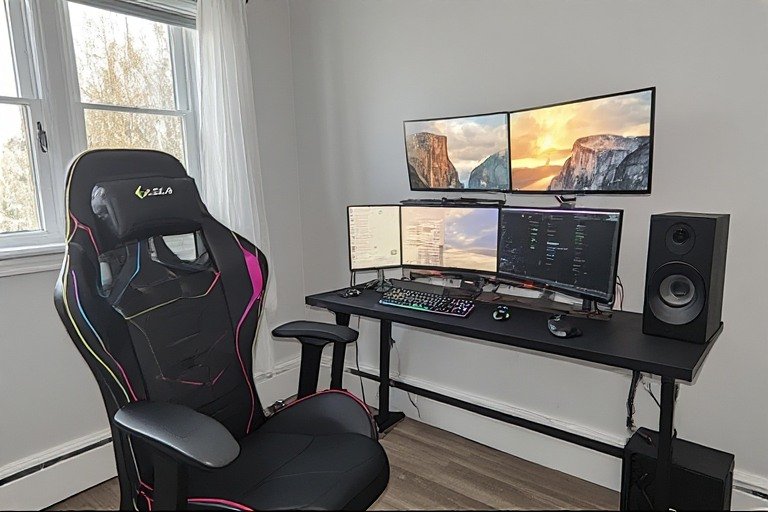
All-black or deep charcoal palette, ambient RGB done tastefully, high-contrast monitors. The current version of this aesthetic desk setup idea tones down the gamer look in favor of something more editorial and focused — less RGB rainbow, more intentional single accent color. If you are building primarily around gaming performance, our gaming desk setup guide goes deeper on the tech side.
Must-Have Elements: Black perforated desk mat, single color LED accent, monitor arm, all-black peripherals, cable raceway under desk, vertical cable spine.
Style 06 — Editorial / Monochrome Aesthetic Desk Setup
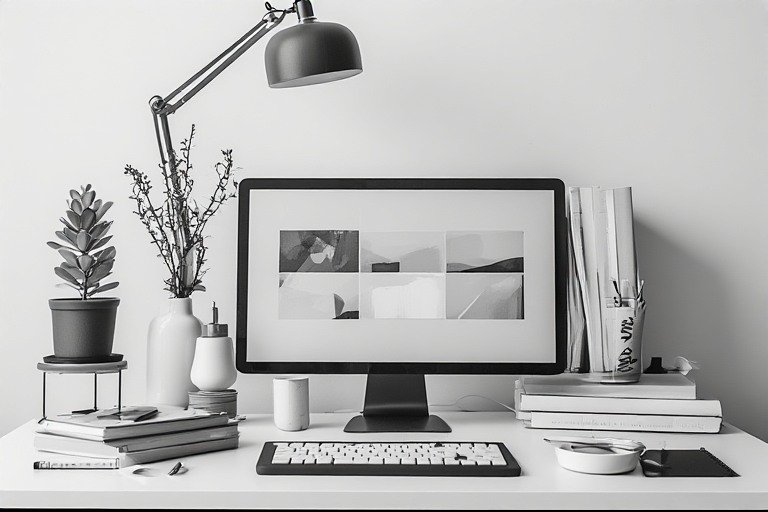
Strictly black and white, or a single restrained color. Inspired by magazine layouts and architecture studios. This aesthetic desk setup idea is the hardest to pull off and the most striking when done right. Every element must be chosen deliberately — there is nowhere to hide rogue colors or mismatched materials.
Must-Have Elements: White desk + white peripherals, B&W art print or photograph, one bold-shape lamp, matte black accents only, no mixed wood tones, negative space as a feature.
Can’t choose one style? That is fine — most great aesthetic desk setups blend two. The key is knowing which is primary and which is accent. A Japandi desk can have one warm Edison lamp (dark academia accent). A cottagecore desk can have clean cable management (dark minimal influence). Mixing works. No direction does not.
Aesthetic Desk Setup Ideas by Room
The same aesthetic desk setup ideas apply differently depending on where your desk lives. Here is how to adapt each approach to your actual space.
Aesthetic Home Office Desk Setup
In a dedicated home office, your aesthetic desk setup has the most creative freedom — you can commit fully to a style without worrying about the desk clashing with bedroom furniture or living room decor. The wall behind the desk becomes a canvas: a gallery shelf in dark academia style, a pegboard with plants for cottagecore, a single large print for editorial monochrome. The most important principle for a home office aesthetic desk setup is that the room and the desk feel like one unified space, not a desk placed inside a room that disagrees with it. For ergonomics guidance that works alongside any aesthetic, our ergonomic desk setup guide covers positioning without sacrificing style.
Aesthetic Bedroom Desk Setup
The challenge with a bedroom aesthetic desk setup is visual separation — your brain needs a signal that distinguishes the work zone from the rest space. Lighting does this better than furniture: keep your desk lamp as the only warm-bright light at the desk, and keep the rest of your room lighting softer. Echo one or two colors from your bedding or wall art in your desk accessories. A sage green lamp and a cream desk pad against white walls create cohesion with almost any bedroom aesthetic without competing with it. The desk surface should always be cleared at end of day — a cluttered desk in a bedroom actively degrades sleep quality.
Aesthetic Desk Setup for Small Apartments
Small apartment aesthetic desk setups succeed through vertical thinking. A monitor arm clears the desk surface and lifts the screen out of the visual field when not working. A floating shelf above the desk handles vertical storage that a wider desk would handle horizontally. Wall-mounted art, a freestanding pegboard leaning against the wall, and adhesive picture ledges for prints all build a beautiful wall backdrop without drilling. In a small space, the aesthetic of the desk and the aesthetic of the room need to work together — choose your desk style from within the same color family as your furniture. See our small desk setup ideas guide for compact-specific builds that maintain strong aesthetics.
Budget Breakdown: What You Can Build for $50, $200, and $500+
The most common misconception about aesthetic desk setup ideas: they require expensive gear. They do not. What they require is editing. A cluttered desk with premium products looks worse than a sparse desk with IKEA pieces arranged with intention.
Starter Aesthetic Desk Setup — Under $75
- Desk pad / mat — the single biggest visual upgrade for any aesthetic desk setup
- One good lamp (thrift stores are excellent for this)
- Cable velcro ties to clean up wire chaos
- One plant (propagated or small succulent)
- Remove 50% of what is currently on the surface
Mid-Range Aesthetic Desk Setup — $75–$250
- Everything in Starter, plus:
- Monitor riser or stand (creates height variation)
- Matching desk organizer set
- Aesthetic keyboard (budget mechanical keyboards start ~$40)
- Wall art print or small gallery arrangement
- Floating shelf above desk for vertical interest
Elevated Aesthetic Desk Setup — $250–$500+
- Everything in Mid-Range, plus:
- Monitor arm (transforms any aesthetic desk setup instantly)
- Quality ergonomic chair in a complementary color
- Upgraded desk surface if needed
- Custom or quality desk lamp as statement piece
- Bias lighting behind monitor
The single best under-$30 upgrade for any aesthetic desk setup: A desk mat. Nothing else touches as much visual real estate and ties the palette together the way a good desk pad does. It is the first thing to buy. Everything else builds from it.
The Right Order to Upgrade Your Aesthetic Desk Setup
Most people buy accessories first and organize later. This is backwards — it means spending money on things that will eventually need to move. Here is the right sequence for building any aesthetic desk setup:
- Edit First — Remove 50% of What’s on Your Desk. Before buying anything, strip the desk down. Box up everything that has been sitting there “just in case.” You will discover what you actually need daily. The edit itself often produces a better-looking desk than any product purchase.
- Fix the Cable Situation. Visible cable tangle is the single biggest killer of desk aesthetics — in every style. Velcro ties, adhesive cable clips, and routing cables to the back takes 20 minutes and costs under $10. Do this before any decorative changes.
- Add a Desk Mat to Define the Space. Choose your pad based on your aesthetic style. Dark leather for dark academia, natural cork or linen for Japandi, pastel-dyed for Y2K. The mat anchors the color story of the whole setup.
- Create Height Variation with a Monitor Riser or Arm. A flat desk surface is visually boring. A monitor raised 4–6 inches creates the step-down effect that makes photos of aesthetic desk setups so satisfying. A monitor arm clears even more real estate and allows you to push the monitor back when not in use.
- Add a Statement Lamp. Your lamp is doing double duty: functional task lighting and a sculptural desk anchor. Choose based on your aesthetic — an arced brass lamp for dark academia, a concrete geometric for editorial, a mushroom lamp for cottagecore. Warm white bulbs (2700K–3000K) flatter every aesthetic desk setup style.
- Add One Living Element. A plant — even a small one — signals that a real person lives here. It softens hard surfaces, adds an organic shape, and introduces color without matching a palette. Pothos and monstera are the most desk-forgiving plants; ZZ plants thrive in low light.
- Address the Wall Behind the Desk. A blank wall behind a well-decorated desk looks unfinished. A single large print, a floating shelf, a pegboard, or washi tape arrangements transform the zone. Keep it in your aesthetic’s palette and do not overcrowd.
- Refine the Micro-Details. Swap out mismatched chargers for a multi-port hub. Get a matching pen cup. Replace a mouse that clashes with your palette. These do not transform a desk — they polish one that is already working. Do not start here.
Aesthetic Desk Setup Ideas for Small Spaces and Renter-Friendly Builds
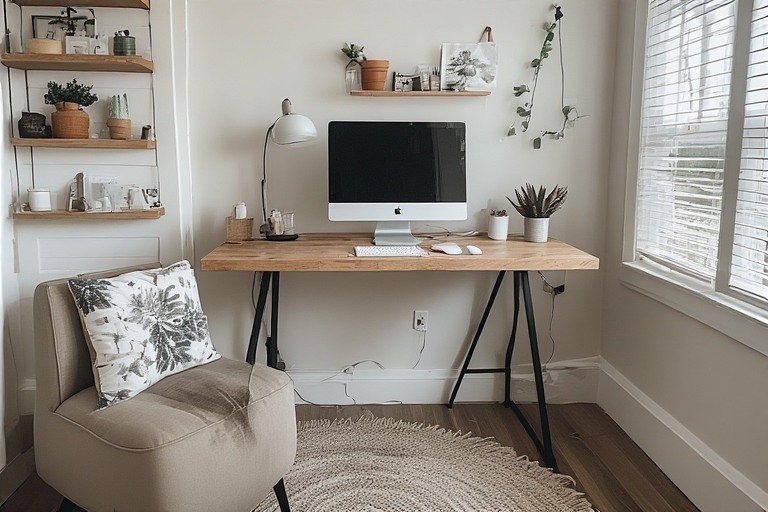
Most aesthetic desk setup ideas content assumes you have a dedicated office room. Most of us do not. Here is how to build a beautiful setup in a bedroom corner, a shared apartment, or a space where you cannot drill into the walls. See also our small desk setup ideas for more compact-specific guidance, and our work from home desk setup guide if productivity and ergonomics are your priority alongside aesthetics.
The Bedroom Aesthetic Desk Setup
The biggest challenge with bedroom aesthetic desk setups is visual separation — your brain needs a signal that this area is “work” vs. “rest.” The solution is not a physical barrier; it is a lighting zone. Keep your desk lamp as the only warm-bright light at the desk, and keep the rest of your room lighting dimmer and softer. The contrast trains your brain, and it photographs beautifully.
For palette, echo one or two colors from your bedding or wall art in your desk accessories. A sage green lamp and a cream desk pad against white walls create cohesion with almost any bedroom aesthetic without competing with it.
The Renter-Friendly Aesthetic Desk Wall
You cannot paint. You cannot drill. Here is what works for an aesthetic desk wall without damage:
- Peel-and-stick wallpaper panels — apply just to the wall section directly behind your desk for a “feature wall” effect without full room commitment
- Freestanding pegboards — lean against the wall, fully removable, carry your aesthetic through what you display
- Adhesive picture ledges — Command strips hold ledge shelves rated for several pounds; perfect for art prints and small plants
- A floor lamp positioned beside the desk — creates a lighting zone without touching the wall
Tiny Desk Aesthetic Ideas (Under 40 Inches Wide)
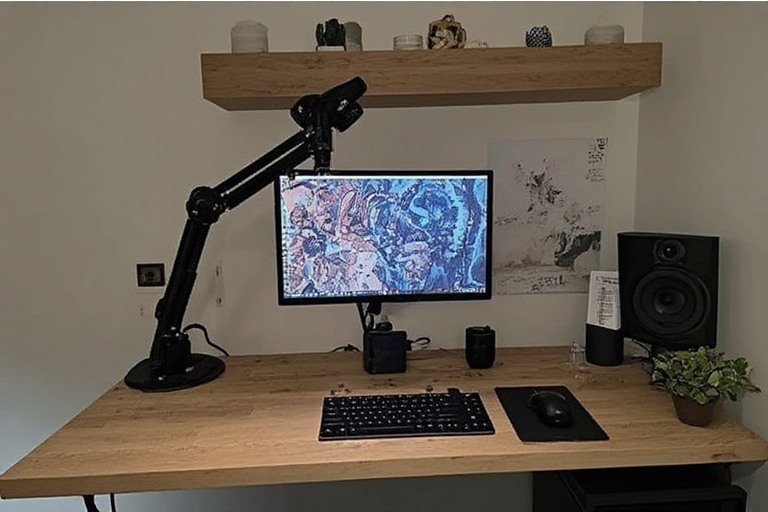
Small desks make height variation more important, not less. A monitor arm that lifts the screen frees up surprising amounts of surface space. A floating shelf above the desk does the visual work that a wider desk would handle laterally. Vertical thinking consistently unlocks more aesthetic potential than horizontal expansion. For IKEA-specific small desk aesthetic builds, see our IKEA desk setup ideas guide.
Corner aesthetic desk setups: L-shaped and corner desks are often overlooked for aesthetics. The inside corner creates a natural nook that is phenomenally photogenic when lit well. Place a tall plant or lamp in the inside corner to anchor the “cockpit” feeling that makes corner setups so satisfying.
Lighting: The Most Underrated Element of Any Aesthetic Desk Setup
Every great-looking aesthetic desk setup photo uses lighting to flatter the space. The same desk in flat overhead fluorescent light looks like an OSHA violation. The difference is not the products — it is the light.
Lighting serves two separate functions in an aesthetic desk setup: task (functional) and ambient (atmospheric). Most desks only have one. The most beautiful setups have both, layered.
Task Lighting
A dedicated desk lamp pointed at your work surface — not at the screen — reduces eye strain and creates a visual focal point. Lamp silhouette matters enormously: an arced lamp creates drama, a classic banker’s lamp creates warmth, a geometric or sculptural lamp creates editorial interest.
Color temperature is everything: warm white (2700K) creates a cozy, golden atmosphere. Neutral white (4000K) works well for concentration. Avoid daylight (5000K+) unless your work requires accurate color matching — it looks cold and clinical in desk photos and in person.
Ambient / Accent Lighting
Bias lighting — LED strips mounted behind your monitor — reduces eye strain by raising the ambient brightness behind the screen. Aesthetically, it creates a halo effect that makes any monitor look like it belongs in a design studio. Choose warm white or a single accent color. Cycling rainbow RGB dates an aesthetic desk setup instantly.
Fairy lights or string lights work particularly well for cottagecore and Y2K aesthetic desk setup styles. Salt lamps add warmth and texture. Candles (real or LED) create a flickering accent that no other light source replicates.
Best Lamps by Aesthetic Style
- Dark Academia — Arched brass desk lamp with warm Edison bulb. The arc creates shadow play across the desk surface that photographs beautifully.
- Japandi — Concrete or stone column lamp. Material does the work. Low-profile, matte, and earthy with one diffused warm bulb.
- Y2K / Pastel — Mushroom table lamp. Rounded dome shape, available in every pastel. Glows rather than beams.
- Dark Minimal — Screen bar / monitor light. No footprint on the desk. Sits on top of the monitor and throws light downward, keeping the surface completely clean.
5 Mistakes That Quietly Ruin Aesthetic Desk Setups
These show up in nearly every “before” photo, and they are the difference between an aesthetic desk setup that looks intentional and one that looks like a shopping cart emptied onto a desk.
- No Defined Color Story. A blue mousepad, a red coffee mug, a black organizer, a white lamp, a wood monitor riser, and a green plant all at once. Each one fine individually — together, they fight. Pick your palette before you buy a single item. Three colors maximum: dominant, supporting, accent.
- Exposed Cables Everywhere. Even the most expensive aesthetic desk setup looks messy with visible cable runs. This is the cheapest fix with the most dramatic before/after effect. Velcro ties run $8. Adhesive cable clips run $6. There is no reason not to do this.
- Everything at the Same Height. A monitor flat on the desk with everything else also flat creates a visual flatline. Height variation is what gives aesthetic desk setup photos that “wow” factor. If your setup looks better in person than in photos, this is why.
- Decorative Items That Are Not Actually Decorative. Stacks of random papers, charger bricks sitting in the open, snack wrappers near the edge. Give them a drawer, box, or shelf. The desk surface is prime visual real estate; protect it.
- Overhead-Only Lighting. Overhead light flattens everything and creates unflattering shadows. If your desk is only lit by a ceiling fixture, no amount of accessories will make it photograph well. Add a desk lamp — your eyes will thank you too.
The Full Aesthetic Desk Setup Checklist
Use this to audit your current aesthetic desk setup or plan a new one from scratch. For ergonomic positioning guidance that works alongside any aesthetic style, see our ergonomic desk setup guide.
Foundation
- Chosen an aesthetic direction and committed to its color palette
- Cleared the desk surface to only essential and intentional items
- All cables managed — routed, tied, or concealed
- At least one-third of desk surface is clear negative space
- Three distinct height levels visible on the desk
Lighting
- Dedicated task lamp in place — warm white, fits the aesthetic style
- Overhead light is NOT the only light source
- Optional: ambient or accent lighting (bias light, string lights, salt lamp)
Decor & Accessories
- Desk mat / pad installed — matches the primary or secondary color
- Monitor riser or arm in place for height variation
- At least one living or organic element (plant, dried flowers, natural material)
- Wall behind desk addressed — art, shelf, or intentional empty space
- No more than three materials or textures present on the desk
Details
- All visible tech accessories share a palette or are neutralized
- Storage is concealed (drawers, boxes, or off-surface shelves)
- One “statement” object — the lamp, a plant, a sculpture — anchors the composition
- No brand stickers or exposed branding clashing with the aesthetic
The final test: Step back three feet, squint your eyes slightly, and look at the desk. Does it feel like one coherent thing, or does your eye bounce between competing elements? If it is the latter, find the item responsible and either remove it or replace it with something that belongs to the palette. Usually it is one rogue item causing the chaos.
Frequently Asked Questions
What makes a desk look aesthetic?
Three things: height variation (objects at different levels), color discipline (three colors maximum — dominant, supporting, accent), and intentional negative space (at least one-third of the surface kept clear). Most desks that look cluttered are missing one or more of these regardless of how much money was spent on the products.
What is the most popular desk aesthetic right now?
Japandi and dark minimal are currently the two most searched aesthetic desk setup styles. Japandi appeals to remote workers and minimalists who want warmth without clutter. Dark minimal has evolved from the gaming battlestation look into something more refined and editorial, with a single accent color replacing the rainbow RGB of earlier years. Cottagecore and dark academia remain strong in the student and creative worker demographics.
How do I make my desk aesthetic on a budget?
Start with a desk mat ($20–$30) — nothing else changes as much of the visual real estate for as little money. Then manage your cables (under $15 total), add one thrifted lamp in the right style, and remove at least half of what is currently on the surface. These four steps cost under $75 and transform most aesthetic desk setups more than any expensive accessory purchase.
What desk is best for an aesthetic setup?
The desk surface matters less than what sits on it and around it — but light-colored surfaces (white, natural oak, light gray) photograph better and make small spaces feel larger. For budget-friendly aesthetic desk setup builds, IKEA’s LAGKAPTEN and KARLBY tops are the most popular choices. See our IKEA desk setup ideas guide for specific combinations.
How do I create an aesthetic home office desk setup?
An aesthetic home office desk setup starts with choosing one style direction (Japandi, dark academia, cottagecore, etc.) and then building every purchase decision within that style’s palette and material language. The three most impactful elements are the desk surface material (light wood, white, or dark matte), the lamp silhouette (which sets the aesthetic tone more than any other single item), and the wall behind the desk (which appears in every video call and every photo). For ergonomics that support long workdays without compromising the aesthetic, see our ergonomic desk setup guide — most ergonomic upgrades like monitor arms and desk mats are also significant aesthetic improvements.
What are the best aesthetic desk setup ideas for students?
The best aesthetic desk setup ideas for students work within tight budgets and small spaces — typically a dorm room or bedroom desk. Start with a desk mat and cable management (under $40 combined), then add a study lamp in your chosen aesthetic style (thrift stores are excellent for dark academia or cottagecore lamps), and use your wall with command-strip picture ledges and freestanding pegboards that do not damage surfaces. The Y2K and cottagecore aesthetic desk setup styles are the most popular among students because they tolerate small desks, limited budgets, and changing living situations gracefully.
Ready to keep building? Browse our guides on clean desk setup ideas, laptop desk setup ideas, minimalist desk setup ideas, ergonomic desk setup, and our full desk setup ideas hub for more inspiration.