Do you ever feel like you’re working incredibly hard but not seeing the growth you deserve? You pour energy into attracting attention, yet converting that interest into actual revenue feels like an uphill battle. It’s a frustrating place to be, and you’re not alone.
Imagine having a clear, step-by-step path that guides potential customers from their first interaction with your brand all the way to a purchase. This structured journey is the core of an effective strategy. It transforms random efforts into a cohesive system for attracting, engaging, and nurturing leads.
A well-designed framework provides this essential roadmap. It eliminates the guesswork, giving you a proven way to achieve your growth goal. This approach aligns your marketing activities, ensuring every action has a purpose.
Industry research shows that many professionals lose nearly 60% of their workday just switching between tools. A centralized system recaptures that valuable time, allowing you to focus on what truly matters—building relationships and growing your business.
Understanding the Sales Funnel Journey
The journey from stranger to loyal customer follows a predictable pattern that smart businesses leverage. This progression forms the foundation of an effective customer acquisition strategy.
Mapping the Customer Journey
Visualizing the path prospects take provides clarity on their decision-making process. You gain insight into what motivates people at different interaction points.
This framework helps you identify exactly where prospects drop off. You can then optimize each touchpoint to move more people toward conversion.
Key Stages: Awareness, Consideration, and Decision
Most customer journeys contain three essential phases. Each requires distinct messaging and approaches to effectively guide prospects forward.
| Stage | Customer Focus | Marketing Approach | Desired Outcome |
|---|---|---|---|
| Awareness | Problem recognition | Educational content | Initial engagement |
| Consideration | Solution evaluation | Value demonstration | Trust building |
| Decision | Purchase readiness | Clear calls-to-action | Completed transaction |
During the awareness phase, people discover they have a need. Your content should educate without being overly promotional.
The consideration stage involves comparing options. Prospects want evidence that your solution delivers real value.
Decision-stage customers need confidence to take action. Remove friction and provide social proof to facilitate the final step.
Benefits of a Well-Crafted Sales Funnel
Implementing a structured customer journey framework yields significant advantages beyond initial contact. This systematic approach transforms how you attract and retain clients.
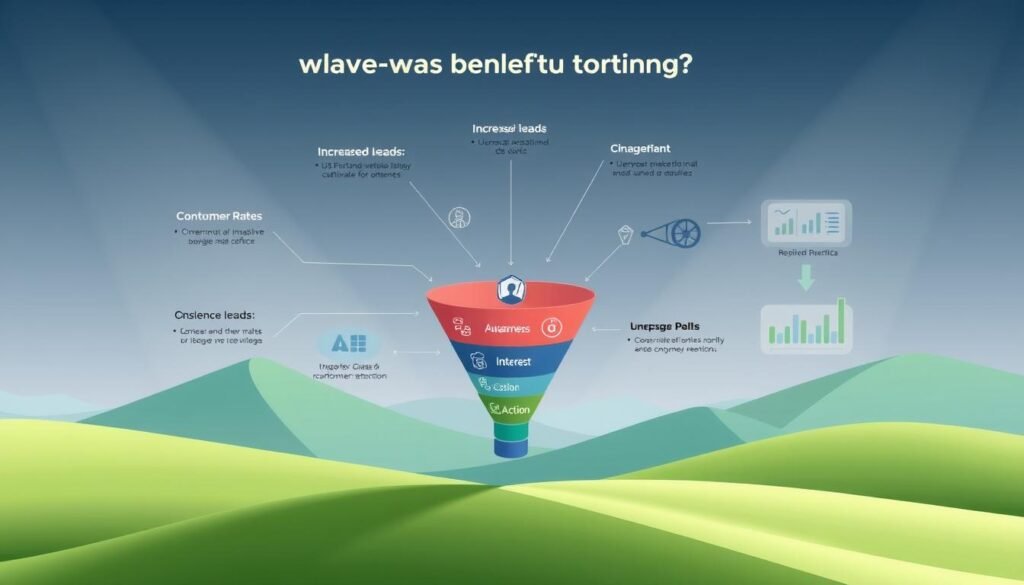
A strategic pathway provides clarity throughout your marketing efforts. You gain better control over your resources and outcomes.
Streamlining Lead Generation
Your lead generation becomes more efficient with a clear framework. Instead of scattered efforts, you follow a proven sequence.
This organization saves valuable time and resources. You can track what works and adjust campaigns accordingly.
Built-in reporting features provide real-time insights into conversion rates. Your team can identify bottlenecks quickly.
Enhancing Customer Retention
A well-designed pathway doesn’t stop at the first purchase. It continues nurturing relationships for long-term value.
You deliver the right messages at optimal moments. This personalized approach builds trust and loyalty.
Your team collaborates effectively with shared templates. Everyone stays aligned on customer interactions.
| Benefit Area | Operational Impact | Customer Experience |
|---|---|---|
| Lead Management | Reduced planning time | Consistent communication |
| Resource Allocation | Better campaign targeting | Relevant content delivery |
| Team Collaboration | Faster onboarding | Unified brand messaging |
The framework adapts to your unique business needs. You can customize approaches for different customer segments.
This flexibility ensures your marketing remains effective as your company grows. You build stronger client relationships over time.
How a Free Sales Funnel Template Empowers Your Business
What if you could launch a customer acquisition system in hours instead of weeks? Pre-built frameworks eliminate the lengthy development phase that often delays revenue generation.
These ready-made structures provide immediate access to proven pathways. You bypass the costly experimentation that consumes both time and resources.
Each component is strategically designed to match customer decision stages. Your team understands exactly what content prospects need at every interaction point.
The framework aligns all marketing activities toward a common objective. Every email, advertisement, and follow-up works together cohesively.
| Traditional Approach | Template Advantage | Business Impact |
|---|---|---|
| Months of development | Immediate implementation | Faster revenue generation |
| Unproven strategies | Tested methodologies | Higher conversion rates |
| Inconsistent messaging | Unified communication | Stronger brand identity |
Your organization gains sophisticated strategies without large investments. The structure provides clear guidance for team members at all experience levels.
This systematic approach ensures no potential customer slips through unnoticed. You maintain consistent engagement throughout the entire buyer journey.
Exploring Top Template Options for Various Industries
Your business model significantly influences how you structure your customer acquisition process. Industry-specific pathways address the unique challenges different sectors face when converting interest into revenue.
These specialized frameworks account for distinct customer behaviors and decision-making patterns. They provide targeted approaches that align with your specific offerings.
SaaS and Software Sales Funnels
Software companies follow a five-stage pathway focused on subscription value. The journey begins with building product awareness through diverse marketing efforts.
Sales representatives then engage leads with personalized demos and targeted communication. This nurturing process qualifies prospects before presenting tailored proposals.
The final stages emphasize long-term relationship management. Renewals and upgrades become crucial for sustained business growth.
B2B Consulting and Service-Based Funnels
Consulting firms require heavier emphasis on trust-building and expertise demonstration. Their pathway focuses on educational content rather than product features.
Prospects need clear evidence of your problem-solving capabilities. Webinars, consultations, and case studies become essential tools.
Personal connection drives the entire conversion process. Customized proposals address specific client challenges directly.
| Template Type | Primary Focus | Key Differentiation | Critical Success Factor |
|---|---|---|---|
| SaaS Pathway | Product value demonstration | Automated nurturing sequences | Recurring revenue retention |
| Consulting Framework | Expertise establishment | Personal relationship building | Custom solution alignment |
Both templates help filter unqualified leads early in the process. Your team can focus energy on high-potential prospects most likely to convert.
Leveraging Social Media and Email in Your Funnel
Building relationships through authentic social content followed by targeted email communication transforms how you connect with potential clients. This dual-channel approach captures wide attention while nurturing deeper connections.
Social platforms serve as your initial touchpoint to attract new audiences. Eye-catching posts and behind-the-scenes glimpses build curiosity around your brand.
Engage Prospects with Social Media Strategies
Reginald Dominique, founder of Reaux Luxe Candle & Co., demonstrates effective social media use. He shares transparent content showing his candle-making process on Instagram.
This authenticity turns casual scrollers into curious prospects. Your social media campaigns should showcase genuine moments that build trust.
Using Email Sequences for Nurturing Leads
Email sequences systematically guide prospects toward conversion. A proven five-email approach delivers consistent value at each stage.
The sequence starts with delivery confirmation and gentle reminders. It progresses to personal storytelling and social proof demonstrations.
Final emails create urgency while maintaining relationship focus. Each message serves a distinct purpose in moving leads forward.
Optimizing Your Sales Funnel for Conversion
Many businesses overlook the powerful impact that small adjustments can have on their customer conversion rates. Systematic optimization turns a functional pathway into a high-performing system that consistently delivers results.
Begin by deeply understanding your ideal buyers. Use surveys, analytics, and direct feedback to learn what motivates their decisions. This knowledge lets you tailor each stage to their specific needs and preferences.
Focus on perfecting one clear pathway before expanding. Attempting to optimize everything simultaneously often backfires. Start with a single sequence, like a lead magnet to email campaign, and refine it completely.

Automation saves time but shouldn’t sacrifice personal connection. Add meaningful touches like using customer names or segmenting communications by interest. These small customizations build trust throughout the journey.
Identify where prospects drop off by tracking abandonment points. Fixing these leaks is typically more cost-effective than chasing new traffic. Even a 2% improvement at one stage compounds into significant gains over time.
Test elements like subject lines, landing page headlines, and call-to-action buttons before scaling. A/B testing reveals small tweaks that drive big improvements in conversion rates.
Remember that optimization requires balancing multiple factors. Consider page speed, mobile responsiveness, value proposition clarity, and strategic social proof placement. This ongoing process ensures your system evolves with customer behavior.
Integrating CRM Tools and Sales Software
The true power of your customer acquisition process emerges when tracking tools work together harmoniously. Connecting specialized platforms transforms scattered information into actionable business intelligence.
Modern platforms like HubSpot, monday CRM, and Pipedrive offer pipeline management starting from accessible plans. These systems provide 14-day trial periods for testing before commitment.
Tracking and Reporting with CRM
CRM integration allows precise lead categorization with custom statuses. You can mark prospects as qualified, lost, proposed, or in demo stages. This gives your entire team instant visibility into each prospect’s position.
Advanced systems enable customer segmentation based on specific needs. Categories like onboarding, nurturing, or attention-needed ensure appropriate follow-up. No prospect falls through the cracks with organized tracking.
Team view functionality shows what each representative is working on currently. Managers can balance workloads and allocate resources strategically. This helps identify team members needing support or additional leads.
Robust reporting capabilities monitor critical sales metrics effectively. You gain insights into conversion rates, deal sizes, and cycle lengths. This data foundation supports informed decision-making for your business growth.
Step-by-Step Guide to Using a Free Sales Funnel Template
Effective implementation transforms your marketing efforts into measurable results. This process begins with proper setup and thoughtful customization for your specific needs.
Setting Up Your Template
Download your chosen framework into Google Sheets, Microsoft Excel, or platforms like ClickUp. Familiarize yourself with the pre-built stages and how each component guides prospects.
Add custom fields to track metrics relevant to your industry. Deal size, lead source, and product interest provide valuable insights.
Customizing for Your Unique Business Goals
Create status labels that match your actual workflow. Use categories like “qualified,” “demo scheduled,” or “proposal sent” for precision.
Set up automation for follow-up emails and task assignments. This saves time while maintaining personal connection.
Track important touchpoints like opt-ins and conversion actions. Regular updates based on performance data ensure continuous improvement.
Identify your buyer persona first, then adapt the structure to match your process. This approach delivers better results than forcing your business into generic frameworks.
Case Studies: Real-World Success with Sales Funnel Templates
Real-world evidence demonstrates how structured approaches deliver measurable improvements across diverse industries. These documented examples provide concrete proof that organized frameworks drive better outcomes.
Examples from SaaS and Real Estate
SaaS companies have achieved remarkable results by implementing optimized pathways. Growth-focused leaders report significant reductions in their sales cycles.
These businesses streamline the journey from initial awareness through renewal stages. The systematic approach ensures no potential client gets overlooked.
Real estate professionals transform their operations using specialized frameworks. Agents capture detailed preferences like room counts and neighborhood choices.
They organize prospects systematically for immediate outreach when matching properties become available. This personalized approach makes clients feel uniquely served.
| Industry | Primary Challenge | Framework Solution | Measurable Outcome |
|---|---|---|---|
| SaaS Companies | Long sales cycles | Automated nurturing sequences | Faster conversion rates |
| Real Estate | Lead qualification | Systematic tracking | Higher close ratios |
Both industries maintain relationships even after deals conclude. Strategic follow-ups keep doors open for future opportunities. These examples show universal applicability across different business models.
Automating Your Funnel for Efficiency
Automated email sequences represent one of the most powerful tools for scaling your prospect nurturing without increasing workload. This approach transforms manual processes into systematic workflows that operate around the clock.
Your team gains valuable time back when repetitive tasks handle themselves. This allows focus on high-value activities like closing deals and building relationships.
Implementing Email Drip Campaigns
Drip campaigns are pre-written email sequences sent automatically based on prospect actions or timelines. They provide consistent follow-up that would be impossible manually.
Effective sequences build trust systematically. A lead magnet campaign might start with delivery confirmation, then progress through brand storytelling and social proof.
Webinar sequences maximize attendance with timely reminders. Post-event follow-ups share replay links and create urgency around offers.
Automation maintains personal connection through segmentation and timing. Your communications feel relevant without constant manual effort.
This systematic approach ensures no prospect gets overlooked during critical evaluation phases. Your brand stays top-of-mind throughout the decision journey.
Wrapping Up Your Sales Funnel Strategy
The strategic framework you’ve explored represents more than just a tool. It provides a complete system for guiding prospects toward becoming loyal customers. This approach gives you control over your entire customer journey.
Proper implementation shifts your business from reacting to opportunities to driving predictable growth. You gain visibility into what moves people forward at each stage. This allows for strategic interventions when prospects might drop off.
Remember that success requires ongoing attention rather than a one-time setup. Continuous optimization based on actual results ensures long-term effectiveness. Track your conversions and refine your approach regularly.
Your immediate goal should be selecting a framework that fits your specific business model. Customize it thoroughly and begin systematic implementation. With commitment to improvement, you’ll build a foundation for sustainable growth.