
Have you ever dreamed of creating something once and watching it generate income for years to come? Imagine building a business that works while you sleep, reaching customers across the globe without shipping a single physical item.
The market for digital goods has exploded, generating over $124 billion in 2025. This represents an incredible opportunity for creators like you to build sustainable income streams.
These virtual items include everything from online courses and ebooks to AI-generated content and blockchain assets. They’re delivered instantly via download or online access, eliminating inventory costs and shipping hassles.
This guide reveals the most profitable options available today. You’ll discover how to identify market demand and position your offerings for maximum success. Learn from real sellers who have built thriving businesses with these innovative products.
Whether you’re a creative professional, educator, or entrepreneur, this approach offers scalable potential. Create your digital product once and sell it repeatedly to customers worldwide.
Understanding What Digital Products Are
What defines these virtual offerings is their existence purely in digital form, requiring no physical inventory. They encompass files, data, and resources that customers access electronically.
These intangible assets span numerous formats. You’ll find educational materials like online courses alongside entertainment options such as music files.
Creative works including digital art and templates also fall into this category. Software applications and video tutorials represent additional popular formats.
Modern delivery methods have evolved significantly. Customers typically receive purchases through instant downloads or email attachments.
Gated membership platforms provide secure access to premium content. Blockchain technology now verifies authenticity for certain assets.
In 2025, these offerings include interactive experiences and subscription models. This creates ongoing engagement beyond one-time transactions.
You can find relevant options across every industry niche. Business tools, creative assets, and educational resources all have potential.
This diversity makes virtual goods accessible to entrepreneurs with various skill sets. The possibilities for creation are essentially limitless.
The Advantages of Selling Digital Products
Choosing to build a business around intangible assets unlocks a unique set of advantages over traditional models. You eliminate many common hurdles faced by physical goods entrepreneurs.
Your overhead costs plummet. There is no need for inventory storage, shipping materials, or managing complex supply chains. This directly boosts your profit margins.
After the initial creation, recurring expenses are minimal. You keep a much larger portion of each sale. This financial efficiency is a game-changer.
Automation becomes your best friend. Platforms can deliver your goods instantly to customers anywhere in the world. This frees up your valuable time for marketing and creating new offerings.
The flexibility of these items allows for diverse strategies. You can offer free lead magnets to grow an email list. Alternatively, create paid subscriptions for exclusive content.
You position yourself in rapidly expanding markets. The e-learning sector is projected to be worth $848 billion by 2030. This represents a massive opportunity for your business.
This approach also supports environmental sustainability. Virtual goods have a lower carbon footprint than physical items. This aligns with modern consumer values.
Ultimately, you can build a source of true passive income. Create an asset once and sell it repeatedly. This scalability is the foundation of a location-independent venture.
The Evolving Digital Product Landscape in 2025
The market for downloadable items has matured, moving beyond simple files to complex, interactive experiences. You are entering a space that generated over $124 billion in 2025, showing massive consumer acceptance.
Blockchain technology has created entirely new categories. Non-fungible tokens (NFTs) represent a market estimated at $500 million, verifying authenticity for unique digital assets.
Customer engagement has transformed. Subscription-based content and interactive models foster dynamic relationships beyond one-time downloads. This creates continuous value and recurring revenue.
Consumer spending patterns confirm this shift. Deloitte research shows virtual goods and services account for 2.7% of total spending. This rivals traditional categories like electronics.
The e-learning sector exemplifies explosive growth potential. Projections show it reaching $848 billion by 2030. Demand for online skill-building fuels this expansion.
Technological advancements have democratized creation. AI and modern platforms allow entrepreneurs without deep technical skills to produce sophisticated offerings. You can compete effectively in global marketplaces.
Best Digital Products to Sell
The digital marketplace offers creators multiple pathways to generate revenue from their expertise and creative talents. You can choose from various formats that match your skills and audience needs.
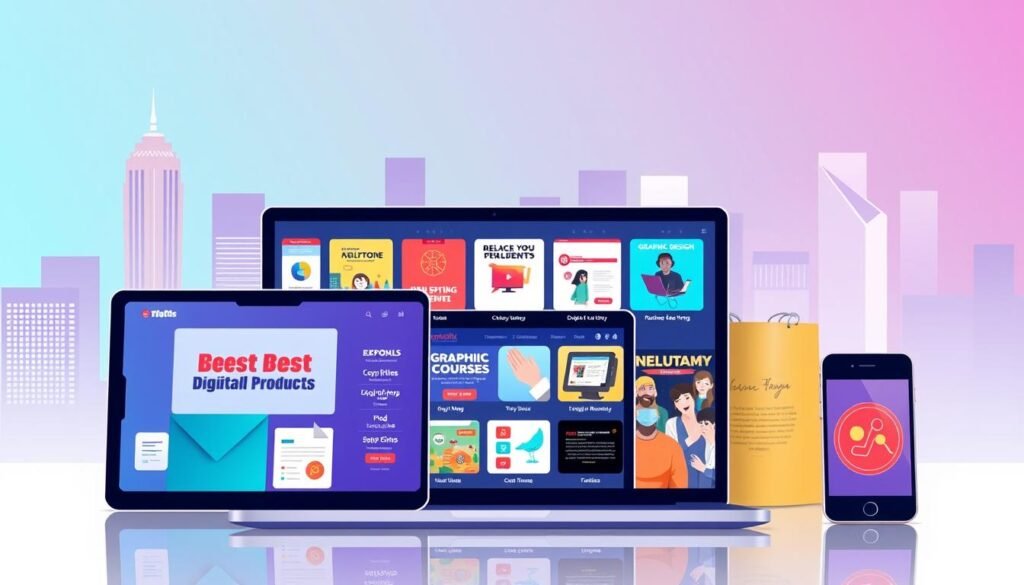
Educational content remains highly sought after. Online courses package your knowledge into structured learning experiences. Students access these repeatedly, creating substantial income from expertise you already possess.
Written materials like ebooks provide low barriers to entry. Writers and experts can publish comprehensive guides without traditional publishing infrastructure. This approach reaches readers directly.
| Product Category | Key Features | Potential Benefits |
|---|---|---|
| Printable Items | Wall art, planners, worksheets | Instant download, home printing |
| Templates & Tools | Design resources, spreadsheets | Saves customer time, recurring sales |
| Licensed Content | Stock photos, music, footage | Passive income, repeated monetization |
| Membership Libraries | Bundled content access | Predictable revenue, community building |
Creative professionals find success with licensed assets. Stock photography and music files generate ongoing income through multiple licensing agreements. These virtual goods require no additional production after creation.
Emerging opportunities include AI-enhanced offerings. Custom prompt collections and workflow templates combine artificial intelligence with specialized knowledge. This addresses specific industry problems effectively.
Product Roundup: Courses, Ebooks, Printables, and More
Exploring specific categories helps you identify the ideal virtual goods for your skills and target market. This overview highlights popular formats with strong revenue potential.
Online Courses and Educational Content
Packaging your knowledge into a structured learning experience is a powerful way to create value. You can develop video walkthroughs, slide decks, or multi-session programs.
Including interactive elements like quizzes boosts engagement. How to Cake It successfully pairs video courses with downloadable cookbooks, offering customers multiple learning formats.
Ebooks, Printables, and Digital Guides
Written materials like ebooks provide accessible content for a wide audience. Your unique expertise and comprehensive coverage justify the purchase.
Printables offer incredible variety. Think wall art, planners, or 3D printer models. Brands like Caravan sell coloring posters as instant downloads, catering to creative hobbies.
Templates, Tools, and Licensing Opportunities
Professionals seek resources that save time. Creating templates for resumes, marketing plans, or graphic design addresses this need directly.
Companies like RetroSupply Co. thrive by selling assets compatible with popular software. Licensing content, such as stock footage through platforms like EditStock, generates recurring income.
| Category | Primary Use Case | Creation Focus |
|---|---|---|
| Courses & Guides | Skill development & education | Structuring knowledge effectively |
| Printables & Art | Personal use & decoration | High-quality visual design |
| Templates & Tools | Workflow efficiency | Solving specific problems |
Incorporating Passive Income Strategies
The true power of virtual offerings lies in their ability to generate earnings without constant attention. This approach creates revenue streams that work autonomously after initial setup.
You build assets once that serve unlimited customers repeatedly. This differs fundamentally from service-based models requiring active time exchange for each transaction.
Creative professionals, educators, and freelancers find this model ideal. It provides supplementary revenue without demanding ongoing involvement in daily operations.
Automated systems handle order processing and delivery seamlessly. Your venture operates efficiently while you focus on other projects or personal pursuits.
You eliminate traditional fulfillment tasks like packaging and shipping. This frees your schedule for high-value activities like marketing and growth initiatives.
The scalability means your earnings potential isn’t limited by daily hours. You can serve thousands simultaneously without proportional workload increases.
Layer multiple revenue streams by creating complementary offerings. This diversifies your income while sharing marketing efforts across your portfolio.
Digital Tools and Templates to Boost Your Business
Time-saving resources represent some of the most sought-after assets in today’s fast-paced business environment. Professionals actively seek solutions that address their daily workflow challenges.
You can create valuable tools that equip users to complete tasks more efficiently. These resources solve specific pain points in areas like video editing, graphic creation, and project management.
Templates offer scalable opportunities that save customers significant effort. Marketing strategy frameworks help entrepreneurs plan campaigns effectively. Resume templates enable job-seekers to present professional applications quickly.
Companies like RetroSupply Co. demonstrate the profitability of design assets. They sell brushes, textures, and templates compatible with Procreate and Photoshop. This serves professionals needing quality resources for their projects.
Business-focused tools show robust market demand. Mobile apps streamline operations while AI prompt templates enhance artificial intelligence output. Website themes help non-technical users establish professional online presences.
Graphic design templates maintain consistent branding for small businesses. They cover brochures, flyers, posters, and social media content. These resources eliminate the need for advanced design skills.
Software plugins extend functionality for popular platforms like Adobe Photoshop. They become essential additions to existing workflows rather than standalone purchases. This creates ongoing revenue opportunities.
Specialized resources like icons, fonts, and UX kits serve web designers. They provide consistent, high-quality assets for client projects. These professional necessities justify premium pricing.
Leveraging AI and Emerging Technologies
Emerging technologies like AI are opening doors to new categories of downloadable assets that solve real problems. These innovative offerings combine technical capabilities with practical applications.
Custom AI prompt collections help people achieve better results from platforms like ChatGPT and Midjourney. These curated resources save time while improving output quality.
Workflow templates automate repetitive tasks for businesses. They represent valuable product ideas that streamline operations and reduce labor costs.
| AI Product Type | Key Features | Target Audience |
|---|---|---|
| Prompt Collections | Curated instructions, platform-specific | Content creators, marketers |
| Workflow Templates | Automation sequences, time-saving | Business professionals, entrepreneurs |
| Voice/Character Packs | Custom AI voices, character designs | Video producers, podcasters |
| Industry-Specific Tools | Specialized solutions, expert knowledge | Niche professionals, specific industries |

The NFT market reached an estimated $500 million in 2025, showing substantial opportunity. Blockchain-verified assets require understanding both technology and audience needs.
Focus on creating industry-specific solutions rather than general-purpose tools. Identify particular business problems where your expertise delivers superior outcomes.
The most profitable AI-enhanced products combine technological capabilities with deep field knowledge. This positions you as an expert who understands both tools and practical challenges.
Stay informed about technological developments while solving real problems for real people. Emerging technologies continue creating new categories faster than ever before.
Building Your Online Store for Digital Success
Your website serves as the foundation for showcasing your offerings and building lasting customer relationships. This professional presence establishes credibility that marketplace listings cannot match.
Shopify represents the most reputable option for creating your online store. You don’t need technical skills or a large budget to get started.
The platform offers AI-powered design that generates custom themes tailored to your business concept. Alternatively, choose from over 100 professionally designed templates with built-in features.
Free Shopify apps extend your store’s capabilities for inventory management and automated delivery. These tools help you build sophisticated functionality without expensive development.
Alternative platforms like MailerLite enable immediate selling with integrated payment collection and promotion tools. This single-platform approach simplifies operations for beginners.
Your own store gives you complete control over branding and pricing strategies. You avoid marketplace commission fees while building valuable long-term assets like customer email lists.
Effective Digital Marketing and Social Media Strategies
Effective promotion requires understanding how different channels work together to build awareness and drive sales. Your marketing approach connects your creations with interested buyers across various platforms.
Social media platforms offer powerful storefront capabilities. Users can discover and purchase items while scrolling through their feeds. This reduces friction in the buying process.
Email campaigns nurture relationships with subscribers over time. They allow you to share valuable information and targeted offers. This converts interested prospects into paying customers.
| Marketing Channel | Primary Function | Conversion Strength |
|---|---|---|
| Social Media Storefronts | Impulse purchases & discovery | High immediacy, low friction |
| Email Marketing | Relationship building | High trust, targeted messaging |
| Landing Pages | Focused conversions | Eliminates distractions |
| Content Marketing | Authority establishment | Educational, natural lead-in |
Platforms like MailerLite consolidate tools into single solutions. They provide capabilities for email, landing pages, and payment processing. This simplifies your operations significantly.
Content demonstrates your offerings’ superior value through tutorials and case studies. It educates your audience and establishes authority. Neoseed.io balances free and premium content effectively.
Well-written descriptions showcase what makes your items unique. They help potential buyers understand the benefits clearly. This approach builds trust with your target audience.
Understanding Pricing, Licensing, and Profit Margins
Your pricing strategy directly impacts both customer perception and your bottom line profitability. Choosing the right model requires understanding your target market and production costs.
| Pricing Model | Key Features | Ideal Use Cases | Revenue Potential |
|---|---|---|---|
| One-Time Purchase | Single payment, permanent access | Standalone items, ebooks | Immediate revenue |
| Subscription | Recurring payments, ongoing access | Content libraries, services | Predictable income |
| Package Bundles | Multiple items, discounted rate | Related resources, toolkits | Higher average sale |
| Licensing | Usage rights, tiered pricing | Commercial assets, templates | Repeated monetization |
You achieve high profit margins since these creations involve minimal recurring costs. Always calculate complete margins by accounting for payment fees, marketing expenses, and platform commissions.
Competitor research gives you a starting point for setting your price. Pricing higher than the market can actually increase perceived value among customers.
Licensing models create flexible revenue opportunities. Companies like EditStock demonstrate this by selling usage rights for stock footage. You can offer free items to build your email list alongside paid subscriptions for exclusive content.
This approach allows you to monetize the same asset across different customer segments. It addresses varying levels of demand in your target market effectively.
Optimizing Your Website and Store for Conversions
The design and functionality of your online presence can significantly impact whether browsers become buyers. You need to create a seamless experience that guides visitors toward making purchases.
Platforms like Shopify offer over 100 professional templates with built-in features. These templates ensure your store loads quickly and works perfectly on mobile devices.
User Experience Enhancements
Your website should make it easy for customers to find what they need. Fast loading speeds and intuitive navigation keep visitors engaged rather than frustrated.
AI-powered design tools help create custom themes tailored to your specific business. This ensures visual consistency that builds trust with your target audience.
Conversion Rate Tactics and Call-to-Actions
Well-written descriptions clearly articulate benefits and use cases for your offerings. They demonstrate superior value over free alternatives and competitor items.
Strategic placement of compelling call-to-action buttons guides visitors toward purchase decisions. Urgency elements and trust signals can increase confidence in buying choices.
| Optimization Area | Key Strategy | Expected Impact |
|---|---|---|
| Page Loading Speed | Optimized images and code | Reduces bounce rates by 40% |
| Mobile Responsiveness | Adaptive design testing | Increases mobile sales by 35% |
| Product Descriptions | Benefit-focused content | Boosts conversion rates by 25% |
| Checkout Process | Simplified steps | Decreases cart abandonment |
Landing pages optimized for conversions eliminate distractions and present focused value propositions. They guide visitors toward specific actions through clear pathways.
Continuous testing of different website elements reveals which combinations generate the highest conversion rates. This data-driven approach ensures ongoing improvement of your sales performance.
Exploring Platforms for Selling Digital Products
Selecting the right sales venues requires balancing audience access against commission costs. You can distribute your creations through multiple channels to maximize reach.
Building your own online store gives you complete control. You avoid marketplace fees that can reach 50% per transaction. This approach protects your profit margins.
Marketplaces like Etsy provide immediate access to established audiences. They work well for printables and creative assets. You trade lower margins for built-in traffic.
Social media platforms enable direct purchases through integrated storefronts. Users can buy items without leaving their feeds. This capitalizes on impulse browsing behavior.
| Platform Type | Primary Advantage | Key Consideration |
|---|---|---|
| Owned Store | Full control & branding | Requires driving your own traffic |
| Niche Marketplaces | Targeted audience access | High commission fees |
| Social Storefronts | Impulse purchase potential | Platform algorithm dependence |
Solutions like MailerLite offer free starting points with integrated tools. They combine payment processing with marketing capabilities. This simplifies operations for beginners.
Your ideal strategy combines owned properties with marketplace exposure. This diversified approach maximizes both reach and profitability over time.
Tailoring Digital Products for Niche Markets
Specialized solutions for particular audiences often outperform generic alternatives in both pricing and demand. When you focus on a specific niche, you can address exact pain points that matter to your target audience.
This approach positions you as an expert who understands specific challenges. Your offerings become more valuable because they solve real problems for real people.
Industry-Specific Ideas for Content Creators, Freelancers, and Coaches
Content creators can develop mini-courses that deliver focused lessons through email. Paid newsletters provide deeper analysis than free content. Digital guides compile expertise into comprehensive resources.
Freelancers possess valuable knowledge from their professional journeys. Customizable proposal templates help others win clients effectively. Online communities facilitate networking among independent professionals.
Life and wellness coaches can extend their reach beyond individual sessions. Meditation audio recordings and video courses teach coping strategies. Printable journals help clients track progress toward personal goals.
Designers have multiple avenues for creation. Presentation templates help businesses communicate more effectively. Design sets can be sold as downloadable packages or print-on-demand merchandise.
Understanding your audience’s specific challenges enables you to create offerings that provide genuine value. Your existing skills become powerful assets when applied to well-defined markets.
Creative Design and Product Presentation Techniques
Professional presentation transforms your virtual items from mere files into desirable solutions. Your visual approach directly influences purchasing decisions and communicates quality before customers even read descriptions.
Showcase Value with High-Quality Imagery
Since people cannot physically examine your creations, imagery becomes their primary way to assess value. Skilled photographers identify features that matter most to shoppers and emphasize them through composition.
Invest in proper equipment like quality tripods and learn lighting techniques. This elevates your photography from amateur snapshots to professional visuals that build trust. Show your items “in action” through lifestyle demonstrations.
Building a Cohesive Brand Identity
Avoid “blanding” where generic visuals attempt to appeal to everyone. Instead, develop distinctive aesthetics that resonate powerfully with your specific audience. Your brand identity should appear consistently across all touchpoints.
Use consistent color palettes and typography that reflect your personality. This creates recognition and reinforces professionalism. Your presentation should communicate how creations improve lives rather than just listing features.
Designers can leverage their skills to develop unique visual styles. These make your offerings instantly recognizable and build emotional connections with your target customers.
Wrapping Up Your Digital Product Journey
The opportunity to transform your skills into sustainable income streams is more accessible than ever before. Your unique knowledge holds real value for people seeking solutions. This business model works for creators across many fields.
The market for these creations generated over $124 billion in 2025. E-learning alone may reach $848 billion by 2030. Now is the perfect time to start selling your own offerings.
Begin with simple plans and test your ideas. Learn what resonates with your target market. Refine your approach based on real feedback from customers.
Success comes through consistent effort and genuine value creation. Your journey will involve continuous learning and improvement. Take that first step today toward building your online business.